
Freelancing with a chronic health condition: challenges and strategies
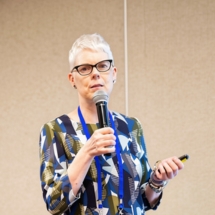
Fiona Grace Peterson, who herself lives and works with chronic health conditions, began by stating that her presentation would cover a lot of ground. For a start, there is no agreed definition of chronic ill health, with some definitions being based on duration, e.g. “three months or longer” (US) compared to “a period of years or decades” (UK). While these duration-based definitions can leave sufferers without support, the list-based alternatives often exclude the more invisible conditions, invalidating human experience. This lack of consensus often leads to sufferers feeling they are not taken seriously, even though statistics show that in Europe around a third of under-65s and nearly two thirds of over-65s have at least one chronic health condition, with the figures being higher in the USA.
Fiona drew widely on a 2024 survey comprising 17 closed and open questions, which was publicised on Facebook and LinkedIn, and in the MET newsletter. It asked respondents about challenges, strategies and support, and whether they would recommend freelancing to others. The survey respondents lived with a wide range of chronic conditions, ranging from migraine via arthritis, diabetes and chronic pain to ADHD, irritable bowel syndrome and chronic fatigue.
The challenges mentioned included the physical and cognitive symptoms, the fact that these symptoms fluctuate and are unpredictable, and the anxiety generated by never being sure what can be managed and what cannot, such as when attending in-person events. The time lost to the condition and used for extra medical appointments creates financial instability, often causing a vicious cycle with too little time to look for better-paying clients to offset the loss in income. Overall, these factors can lead to mental health struggles and feelings of being overwhelmed.
Fiona then addressed the issue of success and productivity in our society, factors which are inextricably linked in our culture. Living with a chronic health condition demands that we rethink and redefine our benchmark of success and our feeling of worth, given that we cannot achieve the productivity levels of our fit colleagues. Another psychological challenge is the feeling of grief about the life we cannot or can no longer have due to chronic ill health.
In the last part of her presentation, Fiona turned her attention to the strategies we need to develop by asking, “How should freelancing evolve?” While it is not our fault to have a chronic health condition, it is our responsibility to develop coping strategies for living with it. The first pillar of this support is communities – online or in person – to share experiences, discover new treatment options and learn to adapt. As a freelancer, we need to build sustainable client relationships, working on factors like project pricing, long-term retainers and fewer but higher-quality clients. Added to this, we need to aim for more flexible deadlines to reduce stress.
A further key component of managing the chronic condition is self-care. Respondents in the survey mentioned the importance of prioritising rest, something which again runs counter to our society’s accepted norms. In addition to this key strategy, next in importance were adjusting schedules, fostering self-acceptance, making ergonomic adjustments and aiming for longer deadlines.
While people with chronic health problems have often tried to hide what may be judged as “weakness”, Fiona challenged this approach and recommended normalising conversations about ill-health in the workplace. She concluded by proposing that freelancing should not be a matter of those with chronic health conditions adjusting to working in a traditional way, but more a case of reshaping work around the reality that health, energy and capacity fluctuate for everyone throughout their lives.
This METM26 presentation was chronicled by Lynda Hepburn.
Featured photo by METM26 photographer Giancarlo Menghini.