
Uncovering unheard voices: the Oxford English Dictionary and beyond
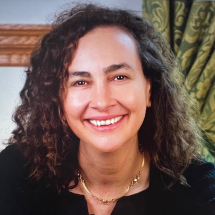
Sarah Ogilvie, Professor of Language and Lexicography in the Faculty of Linguistics, Philology and Phonetics at the University of Oxford, was involved in the third edition of the Oxford English Dictionary (OED) as one of its editors. She has also written books exploring the dictionary’s history and compilation, including The Dictionary People: The unsung heroes who created the Oxford English Dictionary. This book formed the basis of her keynote address at METM26, a stimulating presentation that closely reflected the conference theme of Voices Heard and Unheard.
A discovery in 2014, towards the end of her time working with the OED, provided the starting point for Ogilvie’s subsequent research. In the Oxford University Press archives she came across three address books belonging to James Murray, the primary editor of the OED’s first edition in the nineteenth century. The books contained the names and addresses of people who had responded to appeals published in newspapers and journals, inviting members of the public to contribute to the dictionary. Their task was to identify quotations from books illustrating how particular words were used and submit them on individual slips of paper. The collection of slips eventually reached a total of several million. The address books revealed the identities of around 3,000 volunteer contributors from all over the world.
Ogilvie’s discovery prompted her to investigate the lives and backgrounds of these otherwise largely forgotten contributors, and her research resulted in the publication of The Dictionary People in 2023. Her METM26 presentation highlighted the remarkable diversity of these individuals, presenting the OED as a collaborative undertaking involving a much wider cross-section of society than might traditionally have been assumed.
In sharing details about some of the most prolific contributors to the OED, Professor Ogilvie pointed out that a total of 161,000 slips had been provided by just one correspondent. Another contributor had devoted so much time to the preparation and research of slips for the OED editorial team that he eventually ended up in penury, and the poor man presented in person to the dictionary team in Oxford with a desperate plea for help.
Always enhanced by an appropriate image or photo, Professor Ogilvie’s selection of correspondents included a mention of Karl Marx’s daughter and highlighted many different types of people sending in word slips to Oxford, from astronomers to murderers, naturists, pornographers and suffragists. We learned too of just how much of an enterprise the OED actually is – a single word alone may produce 42 pages of exposition, a truly astounding detail.
With her palpable delight in sharing the stories and photos of contributors unearthed in her research, Professor Ogilvie won over all her listeners and received a well-deserved standing ovation at the conclusion – a very fitting outcome for an extremely stimulating talk. Professor Ogilvie’s discourse put the focus back on the very basis of our profession of translation and editing, namely on words, those words on slips sent to the OED by largely non-academic contributors. She also pointed out that a technology such as AI doesn’t underlie the OED, but rather the opposite: the OED is used to check the accuracy of AI output.
Although the professor was unable to join us in person in Perugia, she delivered what was in my view an outstanding and informative talk on one of the key reference works for speakers and learners of English.
This METM26 keynote was chronicled by Laurence Fogarty.
Photo credit: Robert Taylor