
To specialize, or to diversify? That is the question…
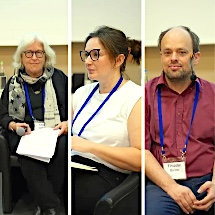
I was curious about where this two-person panel discussion would go, and if I’m honest, I was hoping for a balanced debate between Chris Durban (who has long been very vocal in encouraging translators to specialize) and Tim Barton (highly experienced, but multi-specialized). That’s not quite what we got, but there was a lively and interesting interaction, expertly chaired by Helen Oclee-Brown.*
As we are all aware, the translation landscape is changing: translation work is becoming editing work, the era of the agency may have run its course, and price pressure is a reality for clients too. But Chris was adamant that we be aware of how any corner-cutting might affect our image, and that we communicate the impact it could have on our clients’ image.
Chris insisted that specializing is a way of taking agency, but that becoming highly specialized is a life’s work and requires us to get out of our comfort zones to speak directly to clients. She really encouraged us to do that, because those same clients can be surprisingly generous to newcomers. As the candidate for diversity, Tim wasn’t just speaking from his own experience: he had talked to a number of translators. The overall outcome of his informal survey was that, in the current context, more specialized translators are struggling less. This might sound as though that was the end of the debate, but the full picture is more nuanced.
Specialization can extend beyond subject matter expertise. Unusual language combinations are a good example. However, in Tim’s survey, few experienced translators said they were considering adding languages. But if we already have one or more rare languages, that can count as specialization. For those of us considering further study in a new direction, Chris encouraged us to verify that there is a need for translation in that field, but also that there is money to pay for it.
Tim himself is not very specialized, but he has found a gap in the market in Namibia, where he just happens to be the most highly qualified translator in the country. Diversification can be broader than the subject area itself: it can encompass the services we offer, whether language-related – editing, interpreting, subtitling – or in terms of meeting specific client needs – speed or additional services. Chris underlined that even for highly specialized translators, adding skills can be an excellent way to tap into more lucrative markets. To understand what specific services are needed in our communities, Tim recommended studying our local markets, while Chris encouraged us to read the financial press or even use GenAI. Whatever avenue we choose, research can help us to get an idea of the market and to determine what people are prepared to pay for (quality, high-stakes or highly sensitive texts, speed, etc.). Whether we are specialized or not, it can be useful to identify big players in a given field and major events in their calendars, and to gather contact information for the deciders.
The key take-home messages were:
- Becoming more familiar with our client communities is always a good investment, helping us to better target our communication efforts.
- Doing something else is not a failure: our skills as translators and editors are both transferable and highly desirable.
- Assuming our place as essential players in the translation game by accepting visibility, or refusing it if we aren’t happy with the finished product, can help us feel less like pawns.
- Working on communicating our worth pays off, by ensuring that we speak to our audience in the type of language that they use.
This METM26 panel was chronicled by Maighread Gallagher-Gambarelli.
Featured photo by METM26 photographer Giancarlo Menghini.
*Sign in to the MET website to view Helen’s profile.