
Please mind the gap: does the translation/interpreting divide still matter?
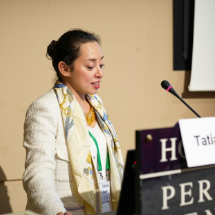
In the context of the shifting European language services industry depicted by the ELIS 2026 survey, Strasbourg-based translator and interpreter Tatiana Kaplun* argues that our problems did not start with AI. Our profession has long faced the (often imagined) threats of rates being cut and meetings being conducted exclusively in English. To her, the real threats are monolingualism and the “good enough” culture. Quoting our well-known colleague Corinne McKay, she encouraged us to cultivate an open mindset and step outside our comfort zone.
Tatiana is well aware that the divide between translation and interpreting exists for a reason: both tasks require and imply some separate skills, training and working conditions. Yet a number of languages, like Russian, don’t have separate words to refer to translation and interpretation but rather specify whether the linguistic task is carried out orally or in writing.
However, our clients do not think in terms of that divide. They come to us with a communication problem looking for a service that will deliver the outcomes they need, such as the success of a meeting or a project. When we receive a new enquiry, we should avoid the bias of our professional instinct, which might lead us to instantly assume the client needs a service we do not provide and refer a colleague. If we don’t want to risk transferring a relationship to our competition, we should make it our job to provide a solution.
To do that, we might require different skills than those we currently have, but skills can be learned. We should then wonder if we have the time (at least 3-6 months), money, competence and capacity to invest in adding an extra string to our bow.
The way forward is not to offer every possible service, but to look into what our clients need now and what they are likely to need in the future. What will be their next problem? To find out, we need to speak to clients and establish good and practical relationships with them, enabling us to look for their potential future needs.
In order to meet people where they are, we should venture outside our bubble and attend conferences where our potential clients might be. The idea is not to pitch our services but to meet the people who make decisions, speak to them with an open mind, and help them see us as the humans we are rather than “the necessary evil”. We should lead our conversations with the client’s communication problem(s), not our service labels, then connect the dots and invest in the professional skills we could develop, within or outside our current specialisation, to solve those problems.
In the end, the divide between translation and interpreting only matters in terms of skills, and those skills can be acquired by either training ourselves or joining forces with other professionals. Diversification is a good option if we can spend the time and money needed to learn new skills; if that is not an option, we can instead follow the example of some of Tatiana’s colleagues who have started working together and pooling their knowledge and training. As an example, she mentioned that in Europe a team of freelance translators can legally group together to respond to tenders.
Tatiana is convinced that clients still want and value the human touch. We should learn how to best communicate what we do and what we bring to the table, and position ourselves as trusted advisers who provide guidance and more comprehensive services than mere translation or interpreting, and who take responsibility when mistakes occur.
This METM26 presentation was chronicled by Elisa Cristóbal González.
Featured photo by METM26 photographer Giancarlo Menghini.
*Sign in to the MET website to view Tatiana’s profile.