
Taming pesky words: an interactive IT-EN session
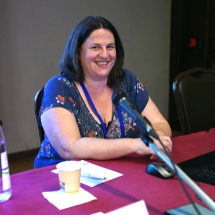
Italian-to-English translators are painfully familiar with certain recurring terms and phrases that crop up so often in Italian texts and have no easy, fit-all solution. Miriam Hurley, an ATA-certified IT>EN translator based in Florence who specializes in certified translations, film and social sciences, has turned this familiar frustration into a collaborative project: her online Pesky Words resource is a growing collection of translation ideas co-shaped by contributions from fellow translators.
What began as personal notes early in her career gradually evolved into a crowdsourced resource in the form of a table on her website, its contents enriched by discussions on translator forums, e-lists and exchanges with colleagues. At METM26, Miriam brought this collaborative spirit into the conference room, inviting participants to recreate the crowdsourcing process in person.
The format was simple and effective. We arrived with our own mental lists of troublesome words, having dutifully resisted the temptation to consult the online resource beforehand. I was particularly curious to discover whether my favourite (or least favourite, depending on your point of view) “Peskies” would feature in Miriam’s selection.
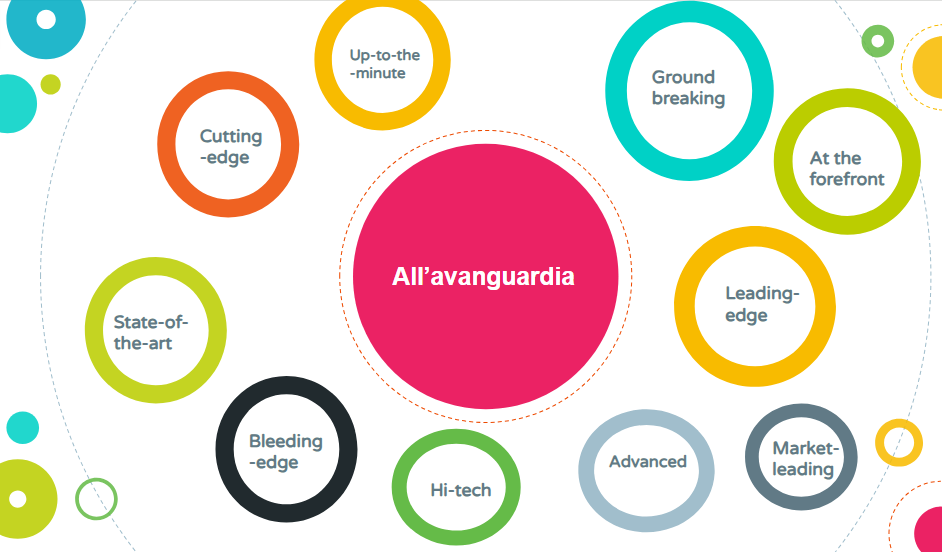
She opened with the examples all’avanguardia, disagio and protagonista, exploring parallels in French, Portuguese and Spanish. Although the session primarily targeted Italian-to-English translators, quite a few non-Italian speakers attended, and it soon became clear that many of these challenges extend across Romance languages.
We then split into small groups to tackle four items: percorso, valorizzare, punto di riferimento and contaminazione. How many translations for these Peskies could we come up with? After we shared our suggestions, Miriam showed us her existing list so we could see which solutions she had already recorded. The exercise generated a surprising number of new alternatives, which Miriam duly jotted down for the online list.
Our discussion made me think of a fundamental difference between Italian and English writing conventions. Italian has a tendency to favour “elegant variation”: avoiding repetition by replacing a word with a synonym or a more abstract expression. Lago (lake) may become specchio (literally, mirror) further on in the text; ospedale (hospital) may reappear as struttura, a generic term that can refer to a facility, establishment, building or service. Such variation can make Italian prose flow elegantly, but it can also introduce ambiguity. English, by contrast, often favours repetition when it helps readers follow the narrative thread. Repeating hospital, for example, may be preferable to replacing it with a vague alternative that leaves readers guessing. So the challenge is not simply to find an equivalent word, but to recognize when the source text’s stylistic conventions call for a different approach in the target language.
Miriam made another thought-provoking observation: “Multilinguals get a feel of what words don’t work in other languages, but at the same time, when you’ve lived in a country for too long, literal starts to sound right.” This tension between linguistic intuition and language attrition is particularly relevant to translators working between languages and cultures every day, like many of us in the room.
Ultimately, the session was about much more than collecting lexical alternatives. It demonstrated the value of context, professional intuition and peer discussion in solving problems that rarely have one universal answer. Miriam’s resource offers inspiration rather than a catalogue of ready-made solutions. Sometimes the best solution is to rethink the whole sentence – or to repeat a word where the Italian text uses an “elegant” variant. The spirit of shared exploration gave us plenty of food for thought. We came away grateful for this valuable resource and keen to contribute further to the crowdsourcing.
This METM26 presentation was chronicled by Marije de Jager.
Featured photo by METM26 photographer Giancarlo Menghini. Slide reproduced with presenter’s permission.